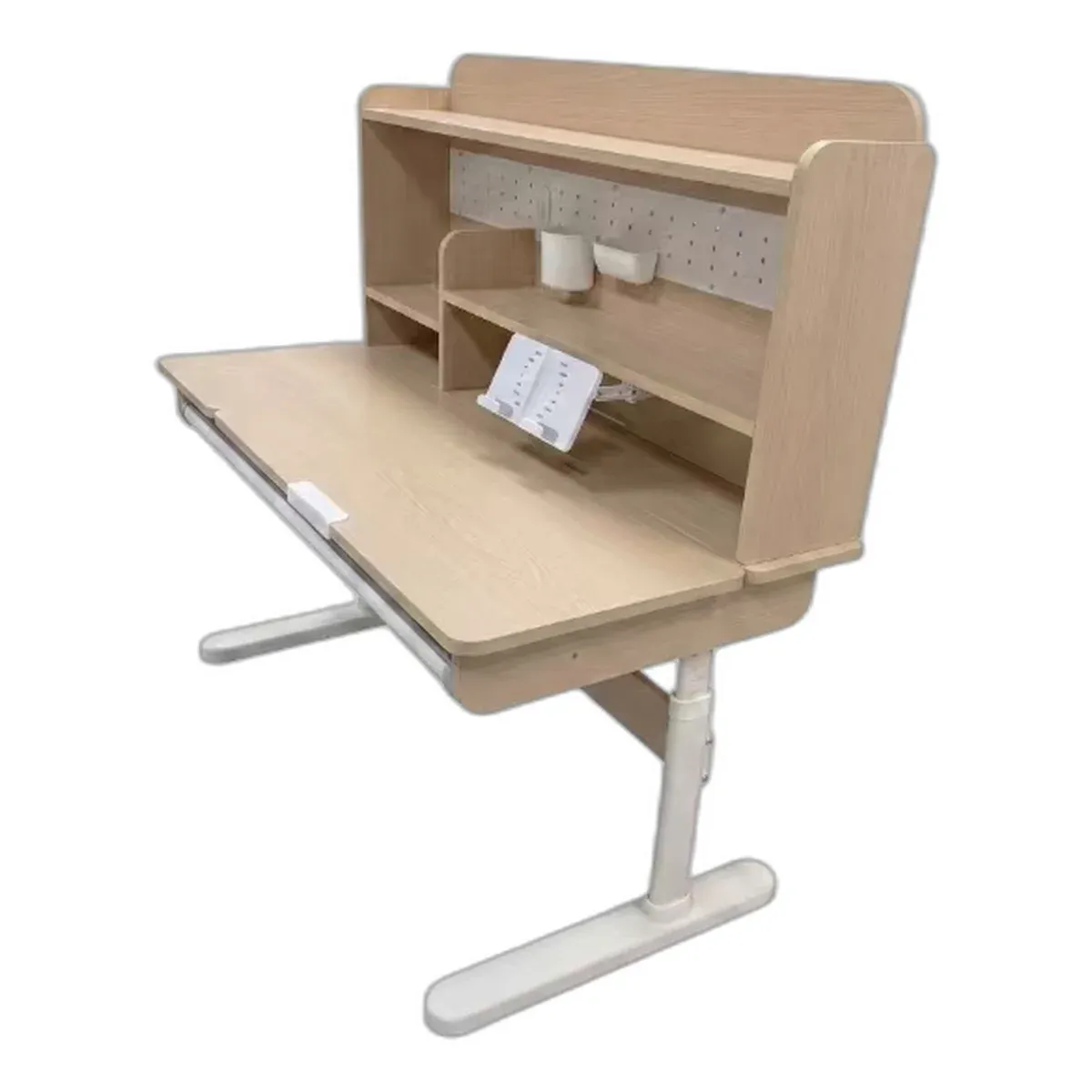
Study Desk Materials: What a Solid Wood Core Gives Your Customers
What a solid wood core gives your customers: teak grain with Nanyang Yingmu, beech grain with Chinese fir, desktops 80–140 cm, colours to match any room.
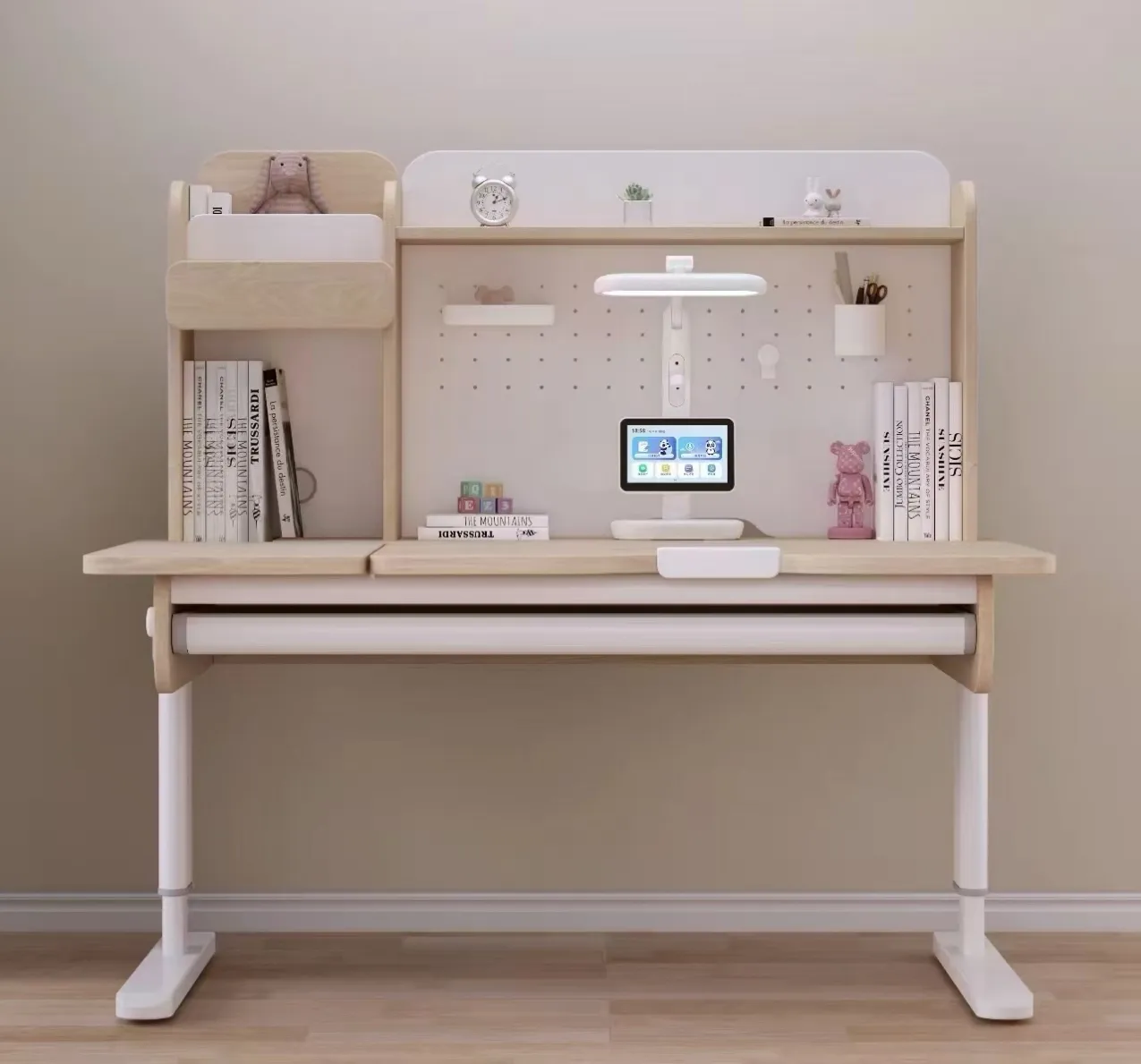
Parents buy a study desk for one reason: a place where a child can work every day. What sells that desk to them is not a specification sheet — it is what the desk gives them: a solid core under a wood-grain surface, a desktop big enough for books and a lamp, and a colour that fits the room. Our desk range is built around exactly those three things.
1. The headline feature: a solid wood core
The strongest selling point in our desk range is the core. Three models name a solid wood core in the catalogue — not a surface finish, but what the desktop is made of inside:
- HO-014-1200 — teak wood grain with a solid Nanyang Yingmu wood core.
- HO-013-600 — beech wood grain with a solid Chinese fir wood core.
- HO-012 — a solid Nanyang Yingmu wood core, in 80 and 100 cm sizes.
That is the feature to lead with when you show the range to a retailer or a parent: the grain is the look they see, the core is the substance under it. A desk that names its core is a desk you can sell with confidence — and every model above states its core in the catalogue, so you can put it in writing for your customer.
2. HO-014-1200: the flagship, and the biggest desktop
HO-014-1200 is the desk to lead the range with. It has the largest desktop we list — 120 × 65 cm, the only 65 cm-deep desktop in the range — in natural wood with a teak wood grain and a solid Nanyang Yingmu wood core. The extra depth is the practical value: room for books, a lamp and homework side by side, instead of stacked on top of each other.
The photo tells the story. The scene photo on our homepage and on this article shows HO-014-1200 set up as a real study corner — books, a lamp, a place for everything. Show that photo to your customer first, then the specification: 120 × 65 cm, teak grain, Nanyang Yingmu core.
3. HO-013-600: the same idea, in 120 × 60 cm
HO-013-600 carries the same selling point in the standard 120 × 60 cm size: natural wood with a beech wood grain and a solid Chinese fir wood core. For a buyer who wants the solid-core story at the most common desk width, this is the model to offer — the same 120 cm of working space, the same named core, in the size most study rooms are planned around.
Together, HO-014-1200 and HO-013-600 are the two desks currently listed on our site. They are the pair to stock first: one flagship with the deepest desktop, one standard-size desk with the same core story.
4. HO-012: the same core, for smaller rooms
Not every study corner is 120 cm wide. HO-012 brings the same solid Nanyang Yingmu wood core to smaller desks — 100 × 60 cm (HO-012-1000) and 80 × 60 cm (HO-012-800) — in natural wood, blue or pink. That is the value for a buyer with smaller rooms or younger children: the same named core, the same choice of colours, in a desk that fits a tighter space.
Across the whole catalogue the range runs 80, 100, 120 and 140 cm wide, in white, blue, pink and natural wood — so a retailer can offer one material story in four sizes and four colours, and match the desk to the room instead of asking the room to fit the desk.
5. What to tell your customers — and what to ask us
When you present these desks, the points that matter are the ones above: a named solid wood core, a desktop size that fits real homework, and a colour for the room. Before you order, ask us in writing:
- Which core does this model have — and is it stated in the catalogue, or confirmed by the supplier?
- What is the desktop size — length and depth in cm — for the exact model, not the range?
- What are the full dimensions, packing size and weight? The catalogue prints desktop size only; the rest is available on request.
- Can I check a sample before the first order, and check the grain and the core against the specification sheet?
- What documents come with the order for my market's requirements? Confirm what the supplier can provide; do not assume a certificate.
Send the enquiry to sales@homilike.com, or use Get a Quote on homilike.com, and we will reply with the specification and packing details and a quotation for the models you need. Full dimensions, packing and weight are available on request for every model.
FAQ — study desk materials
What does a solid wood core give my customers?
A desktop whose material is named, not just its surface. In our range, HO-014-1200 and HO-012 name a solid Nanyang Yingmu wood core, and HO-013-600 names a solid Chinese fir wood core. That is the feature to lead with when you sell the desk.
Which desk should I lead with?
HO-014-1200. It has the largest desktop we list — 120 × 65 cm — in natural wood with a teak wood grain and a Nanyang Yingmu core, and the scene photo shows it as a real study corner. Offer HO-013-600 alongside it for the standard 120 × 60 cm size.
What if my customer has a small room?
Offer HO-012: the same Nanyang Yingmu core in 100 × 60 or 80 × 60 cm, in natural wood, blue or pink. The catalogue covers 80 to 140 cm, so there is a size for the room.
Do the white, blue or pink desks have a solid wood core?
The catalogue does not say for HO Flat Desk (white), HO-018 (white) or HO-001 (blue or pink). HO-012 comes in natural wood, blue or pink with a named Nanyang Yingmu core. For any model where the catalogue states no core, ask the supplier in writing before you order.
How do I check the material before ordering?
Ask for the specification sheet for the exact model, and check a sample against it — desktop size, grain and core — before you confirm the order. We can send samples before a first order.