News
A Study Desk That Grows With Your Child: What Height Adjustment Actually Does
A height-adjustable study desk grows with your child — how the 56–80 cm range works, how to set it, and what buyers should check.
A fixed-height desk fits a child for about two school years. Then the chair goes up, the desk stays where it is, and the child ends up hunching over a surface that is too low — or perching on a cushion to reach one that is too high. A height-adjustable desk breaks that cycle: the same desk is set low in the early years and raised as the child grows, so one purchase covers several school years instead of one.
The three desks in our listed range adjust across 56–80 cm between them. What that range does for the buyer, and what to check before ordering, is below.
- One desk, several school years
The point of height adjustment is not the mechanism — it is the number of years one desk stays right. A child who starts primary school at a 56 cm desktop and finishes it closer to 76–80 cm would otherwise need a new desk in between. With an adjustable desk, the height is reset instead of the furniture being replaced.
That matters to a distributor as much as to a parent. One adjustable model covers the age range that would otherwise need two or three fixed heights, so the stocking list stays shorter and the same model can be sold to families with children of different ages. The range to compare across models is the full span, not just the top or the bottom:
- HO-014-1200 — desktop 120 × 65 cm, height adjustable 56–76 cm.
- HO-013-600 — desktop 120 × 60 cm, height adjustable 56–77 cm.
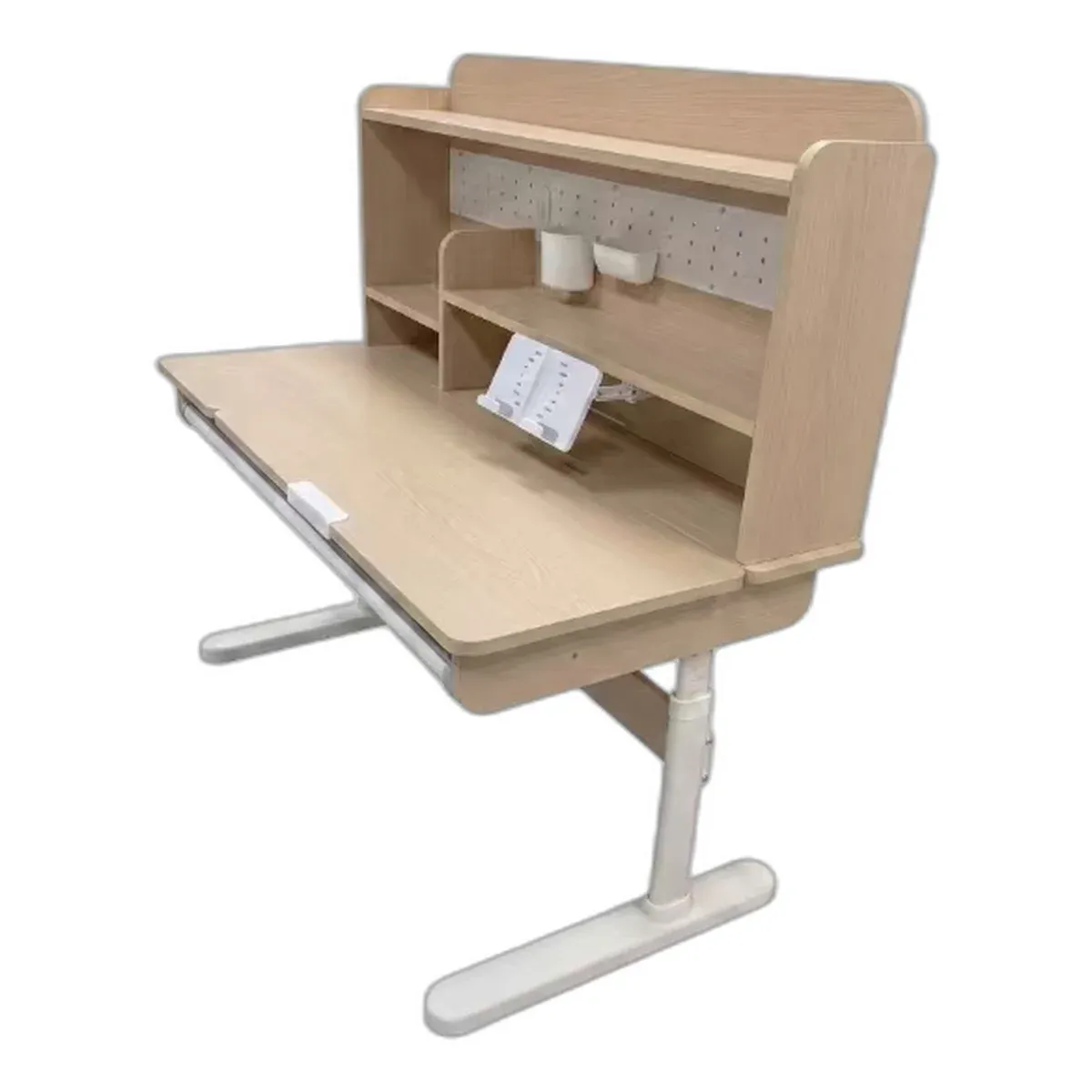
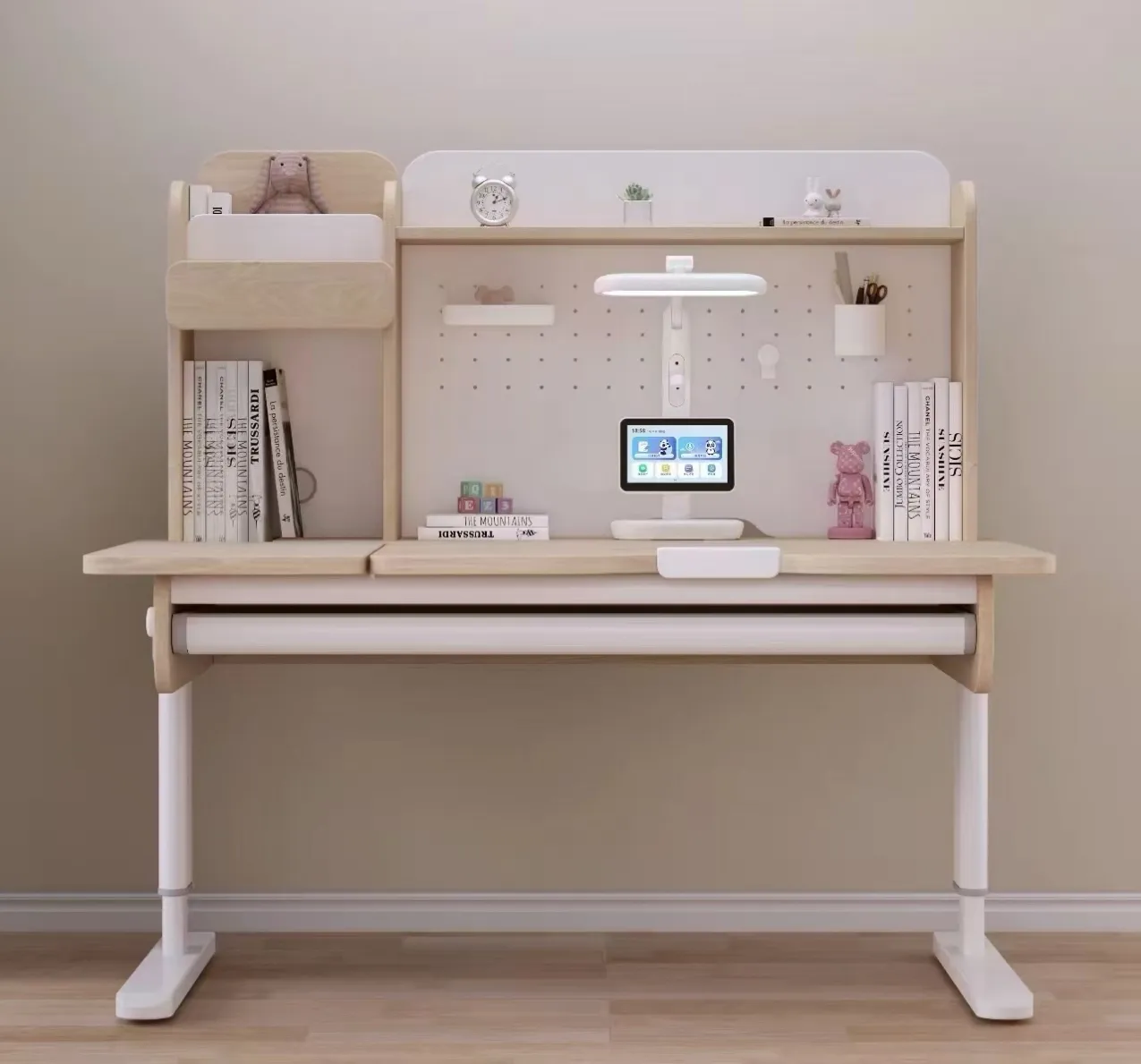
- HO-015-1190 — desktop 119 × 73 cm, height adjustable 58–80 cm, with a 92 cm bookshelf above the desk.
The three overlap heavily, and the difference that matters is at the edges: the lowest setting for the youngest users, the highest for the oldest. A buyer selling mainly to early primary families should weigh the low end; a buyer selling to older children should weigh the high end.
- How to set the height — the check that takes thirty seconds
Height is set by the child sitting at the desk, not by a number on a chart. The check is simple and it is the same at every age: the child sits with feet flat on the floor — or on the chair's footrest where the chair has one — and the forearms rest on the desktop with the elbows roughly level with it. If the shoulders rise to reach the desk, it is too high. If the child leans forward and down to write, it is too low.
That check is worth doing again every school year, because the right height moves with the child and the desk is meant to move with it. A desk that is only ever set once is a fixed desk with extra parts. The habit of re-checking is what turns the adjustment range into years of use — and it is the first thing to show a customer when the desk is delivered.
The HO-015-1190 carries graduated markings on its lifting legs, visible in its product photo, so the height can be set to the same mark on both sides and recorded for next time. Where a model has no markings, note the setting in writing when it is first adjusted — a pencil mark
on the leg, or a line in the delivery note, does the same job.
- What to check as a buyer — before the order, not after delivery
Height adjustment is a moving part, and moving parts are what to check before ordering in volume. Three checks, all of which can be done on a sample:
- The full range moves. Run the desk from its lowest to its highest setting and back. It should move through the whole published range — 56–76 cm on the HO-014-1200, 56–77 cm on the HO-013-600, 58–80 cm on the HO-015-1190 — without sticking partway.
- It holds where it is set. Set a height, load the desktop as it would be used, and check that it stays there. A desk that drifts down under load has to be re-set constantly, which defeats the purpose.
- It adjusts evenly. Both legs should move together, so the desktop stays level through the range. An uneven lift is the fault to look for on arrival, and the check to repeat when a shipment lands.
Ask the supplier in writing how the adjustment is operated and what the rated load is, if those figures are not already published for the model. The catalogue gives desktop size and core material; the adjustment mechanism and load capacity are questions to put in writing with the order, the same way Article 5 recommends for any figure the catalogue does not print.
- Height is half the pairing — the chair does the other half
A desk set to the right height only works if the chair meets it. The study chairs in our range adjust their seat height as well — gas-lift on models such as the SY-3121-2 — and several add a footrest, so a smaller child whose feet do not yet reach the floor is still supported. Desk and chair are set together: the chair first, so the feet are supported, then the desktop to the elbows. Article 4 covers the full sizing checklist for pairing the two; this article is the desk half of that same check.
For a buyer, that is also the stocking argument: an adjustable desk and an adjustable chair are sold as a pair that grows together, and the set pages on homilike.com list them that way — the HO-014-1200 with the SY-3131Z, the HO-013-600 with the SY-3121-2, and the HO-015-1190 with the HO-101-1000.
What height adjustment does — the short list
- One desk covers several school years instead of one or two?
- The published range — 56–76, 56–77 or 58–80 cm — covers the ages you sell to?
- The height is re-checked every school year, with feet flat and elbows level with the desktop?
- The full range moves smoothly, holds under load, and lifts evenly on both legs?
- The adjustment mechanism and rated load are confirmed in writing with the order?
Send the enquiry to sales@homilike.com, or use Get a Quote on homilike.com, and we will reply with the specification and packing details for the models you need. Full dimensions, packing and weight are available on request for every model.
FAQ — study desk height adjustment
What does a height-adjustable study desk do?
It lets the same desk be set low for a young child and raised as the child grows, so one desk covers several school years. Our listed desks adjust across 56–80 cm between them: the HO-014-1200 adjusts 56–76 cm, the HO-013-600 56–77 cm, and the HO-015-1190 58–80 cm.
How do I set the right height?
Have the child sit with feet flat on the floor or on the chair's footrest, and forearms resting on the desktop with elbows roughly level with it. If the shoulders rise, the desk is too high; if the child leans forward and down to write, it is too low. Re-check every school year.
What should I check on a sample before ordering?
That the desk moves through its full published range without sticking, that it holds the set height under load, and that both legs lift evenly so the desktop stays level. Ask the supplier in writing how the adjustment is operated and what the rated load is.
Does the chair matter too?
Yes — the desk is half the pairing. The study chairs adjust seat height as well, and several have a footrest, so set the chair first and then the desktop to the elbows. Article 4 has the full sizing checklist for pairing desk and chair.
Which desk should a distributor stock first?
Compare the ranges against the ages you sell to: the low end matters most for early primary families, the high end for older children. One adjustable model covers the span that would otherwise need two or three fixed heights.